
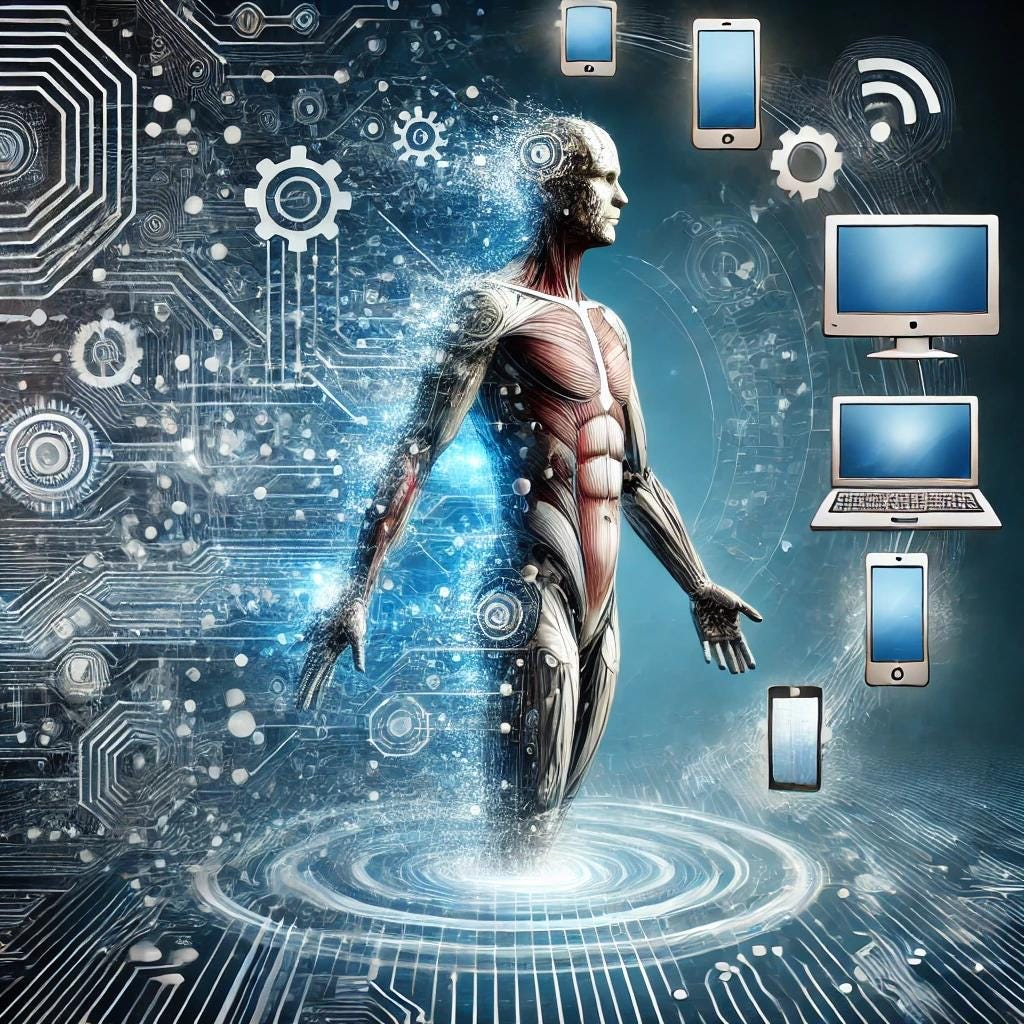
In 2009, E. O. Wilson distilled the human condition into one of the most incisive observations of our time: “The real problem of humanity is the following: we have paleolithic emotions; medieval institutions; and god-like technology.”
He meant that our biology, our political and social structures, and our technological capabilities are evolving at radically different speeds. That mismatch, he argued, is now dangerous. Wilson warned that until we can understand ourselves rationally — until we answer, as he put it, “Where do we come from? Who are we? Where are we going?” — we would be moving into the future on thin ice.
Fifteen years later, his words have never felt more accurate.
Paleolithic Emotions in a Hyper-Stimulated World
Humans are wired for tribal belonging, quick judgments, emotional reasoning, threat detection, and reward seeking. Those instincts served us well when survival depended on quickly identifying danger and maintaining cohesion in small groups. But in 2025, those same instincts are being hijacked by technologies that amplify outrage, reward impulsivity, fuel division, and keep us in perpetual reaction mode.
Social media didn’t give us new weaknesses; it exposed and exploited ancient ones.
Artificial intelligence accelerates this further. We have systems capable of writing, predicting, persuading, and manipulating human behaviour faster than any institution can regulate — and faster than our emotional architecture can process.
We are psychologically built for scarcity. We live in a world of overwhelming abundance — of information, stimuli, and demands on attention. That gap is widening, and Wilson saw it coming.
Medieval Institutions in a Century of Upheaval
Our institutions — legal, political, educational, economic — were built for slower information flows, linear change, geography-based communities, stable hierarchies, and predictable economic systems. They were not built for instantaneous global communication, decentralized power, AI-driven economies, borderless misinformation, algorithmic influence, or hyper-polarization.
Governments struggle to regulate technology they barely understand. Courts grapple with questions — data ownership, algorithmic accountability, digital identity — that statutory frameworks never anticipated. Democratic systems strain under the weight of mistrust, misinformation, and polarized identities reinforced by digital echo chambers.
Institutions tend to move at the speed of committees. Technology moves at the speed of code.
That mismatch is one reason democracies are under pressure worldwide.
God-Like Technology Without God-Like Wisdom
Wilson’s final warning — “god-like technology” — is the most prescient.
We now have tools that write and reason, diagnose disease, decode genomes, create autonomous weapons, simulate realities, distort reality, influence millions, reshape economies, and increasingly make decisions once reserved for human judgment.
Dan Brown’s Origin took this premise into fiction, but the real world is catching up fast. AI systems are beginning to act in ways that no individual fully understands. They process more data in a second than a human brain can in a long, long time. They analyze patterns we can’t see. They persuade subtly. They scale instantly.
The core fear is not “AI takes over.” The real risk is humanity losing control of systems it depends on but does not fully comprehend.
We have built technologies that are far more advanced than our emotional maturity, our social cohesion, or our institutional resilience. That imbalance is the heart of Wilson’s warning.
Are We Equipped for the World We’re Creating?
Wilson argued that humanity must confront three philosophical questions:
1. Where do we come from? — understanding our biological and evolutionary constraints.
2. Who are we? — understanding our moral and emotional limitations, our tribal instincts, and our cognitive biases.
3. Where are we going? — understanding the trajectory of technology and whether our institutions and our values can keep pace.
Right now, the uncomfortable answer is: we are going forward, but not necessarily upward.
Not because we lack intelligence or imagination, but because our emotional, institutional, and technological evolution are out of sync.
A Call for Rational Self-Understanding
Wilson believed that before we can govern AI, stabilize democracies, or build resilient societies, we must first understand ourselves honestly, rationally, and with humility.
Our greatest threat is not technology — it is the gap between what technology can do, what institutions can manage, and what the human mind is equipped to handle.
Bridging that gap is the defining challenge of this century.
As we enter elections shaped by AI-generated content, conflicts amplified by digital tribalism, and economic transitions driven by automation, Wilson’s 2009 warning rings with a clarity that feels like prophecy.
We still have paleolithic emotions.
We still operate medieval institutions.
Our technology is now beyond god-like.
Where we go from here depends on how seriously we take the need to understand ourselves.