
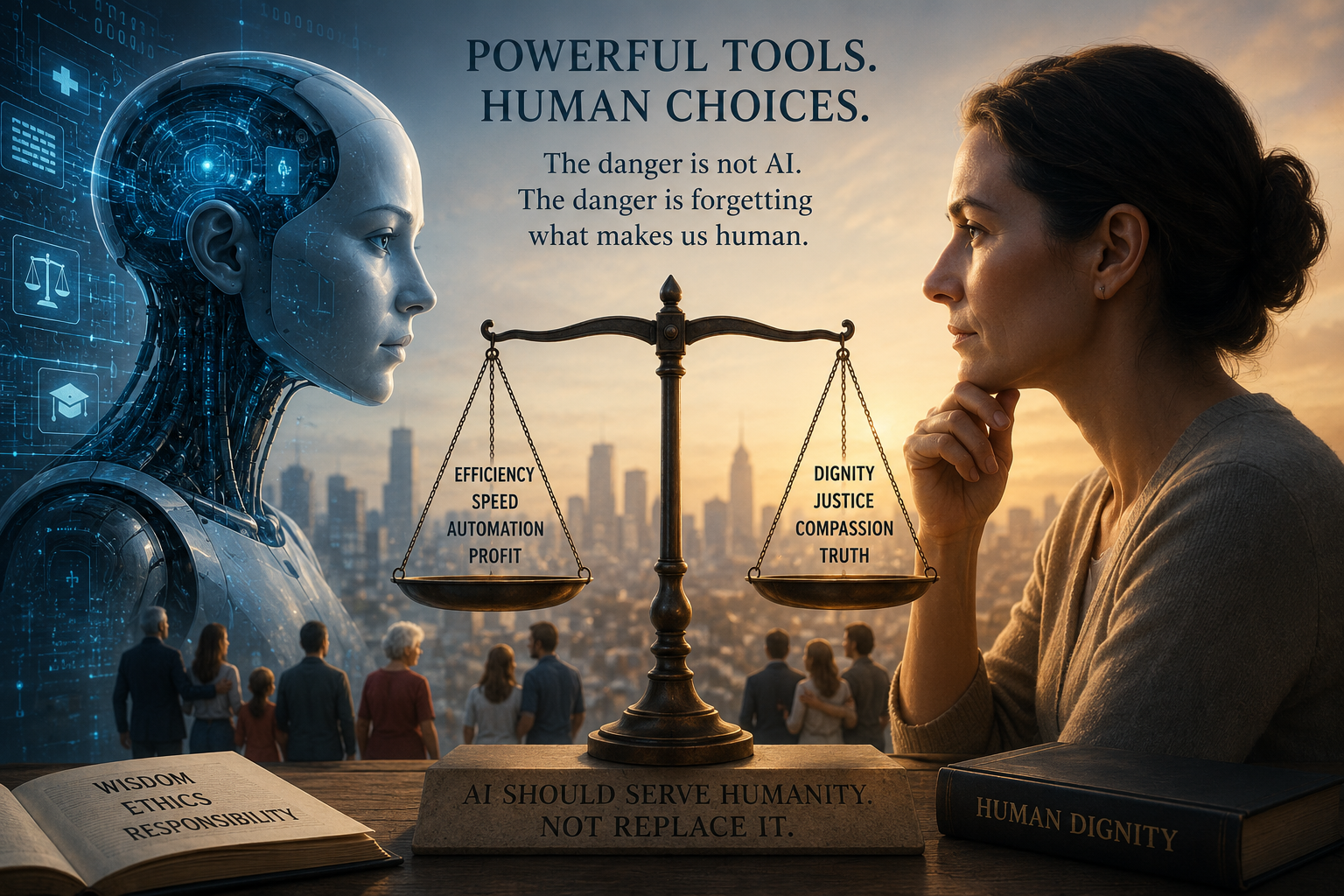
Artificial intelligence is no longer something that is coming. It is here. It writes. It paints. It composes music. It answers questions. It generates images and videos. It can imitate voices and create realistic human characters. In some circumstances, it can perform tasks faster, cheaper and arguably better than many people. The debate is no longer whether artificial intelligence will become part of our lives. The debate is how we should live with it.
Recently, I read an interview conducted by a New York Times reporter with what has been described as the world’s first AI actress. The interview was fascinating, humorous, unsettling and surprisingly insightful. The most profound moment came when the reporter asked about one of society’s greatest fears: What happens if artificial intelligence gets out of control? The AI’s answer was remarkable. It pointed out that the real danger is not an AI system suddenly deciding to become evil. The greater risk is humans building systems carelessly, giving them too much autonomy, connecting them to critical infrastructure, pursuing profit ahead of safety, or using them for manipulation, surveillance, fraud or weapons. In other words, the danger is not artificial intelligence. The danger is human beings.
That observation immediately brought to mind the recent writings of Pope Leo XIV regarding artificial intelligence. The Pope does not warn that machines will conquer humanity. He does not fear a science-fiction future populated by murderous robots. His concern is far more practical and, therefore, far more important. His concern is that humanity may gradually surrender its responsibility for moral judgment.
Technology has always amplified human capability. Artificial intelligence is no different. It can make us more productive. It can help us solve problems. It can improve healthcare, transportation, education, communication and countless other aspects of daily life. However, technology cannot tell us what is right. It cannot tell us what is fair. It cannot tell us what is just. It cannot tell us what is compassionate. Those remain human responsibilities.
The Pope warns that we must never allow efficiency to replace dignity, profit to replace ethics or algorithms to replace human judgment. A society that begins to value people merely for their productivity, predictability or economic utility risks losing sight of what makes human beings unique. As a lawyer and arbitrator, I find that warning particularly relevant. The law is not merely a collection of rules. If it were, we could replace judges, arbitrators, mediators and lawyers with computers tomorrow. The law requires judgment. Judgment requires wisdom. Wisdom requires experience. Experience requires humanity.
Artificial intelligence may one day surpass human beings in memory, speed, calculation and information retrieval. It may identify patterns that no human could ever detect. It may assist in making better decisions. But it cannot bear responsibility for those decisions. That responsibility remains ours.
I am optimistic about artificial intelligence. I can envision tremendous benefits. AI-powered assistants may help seniors remain independent longer. Robotic technologies may allow individuals with disabilities greater freedom and dignity. Dangerous jobs may become safer. Medical diagnoses may become more accurate. Education may become more personalized. Creative people may gain powerful new tools to express ideas and tell stories. I can even imagine a future where AI-generated actors appear in films and audiences scarcely notice the difference.
Yet there are some things I do not believe technology can replace. A sporting event matters because real athletes have trained, sacrificed, failed, and succeeded. A live concert matters because real musicians are sharing a moment with an audience. A friendship matters because another human being genuinely cares about your well-being. A family matters because it is built upon love, responsibility, and human connection.
These things derive their value precisely because they are human. Perhaps that is the lesson we should take from artificial intelligence. The question is not whether machines will become more like us. They will. The question is whether we will continue to value the qualities that make us human.
Artificial intelligence may become one of the most powerful tools ever created. Like every powerful tool before it, it can be used wisely or foolishly, ethically or unethically, for the common good or for selfish purposes.
The future of artificial intelligence will not be determined by machines. It will be determined by the people who build them, regulate them, deploy them and use them.
Artificial intelligence is not the danger. Abdicating our responsibility to use it wisely is. That is the challenge before us. And that is a challenge that no machine can solve for us.