
R. v Singer is a recent Supreme Court of Canada decision arising out of Saskatchewan that addresses an issue most Canadians would not immediately think about: when can the police lawfully step onto your property—and when does that cross the line into an unlawful search? While the case arises in a criminal context, the principles it sets out have broader importance. They speak to the balance between individual privacy and public safety, and clarify what police can—and cannot—do when approaching a home.
The Facts
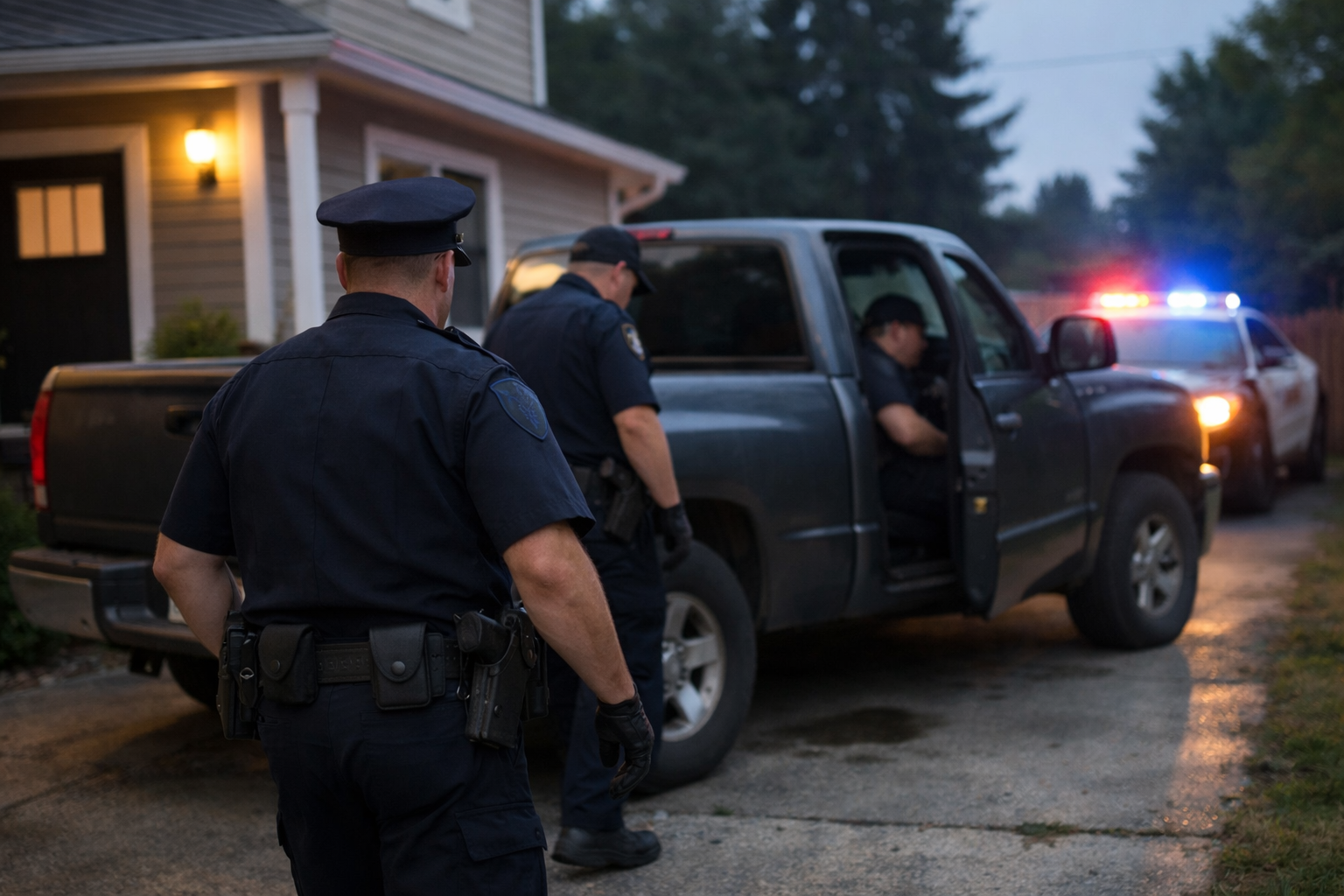
Police received a complaint about a possible impaired driver in a small Saskatchewan community. They later located a truck matching the description:
- parked in a residential driveway
- engine running
- driver apparently asleep or unconscious
The officers:
- Walked onto the driveway
- Approached the vehicle
- Knocked on the window
- Eventually opened the truck door
That led to evidence of intoxication and charges. The legal question was straightforward: did the police violate the accused’s right to be free from unreasonable search and seizure under section 8 of the Charter?
The Supreme Court’s Key Findings
The Court split, but the majority decision provides the governing principles.
- Police Can Approach Your Property—But Only for a Limited Purpose
The Court confirmed that police, like any member of the public, have an “implied licence” to approach a home to communicate with the occupant. That includes:
- walking up a driveway
- approaching a door (or, in this case, a vehicle)
- knocking to attempt communication
This is not considered a “search.”
Why?
Because society accepts that people—mail carriers, neighbours, and yes, police—may approach a residence to speak with the occupant.
- That Licence Has Strict Limits
The key point in Singer is that the licence is not open-ended. It is limited to facilitating communication with the occupant. Once police go beyond that purpose, they step outside the licence and into Charter territory. In this case:
- knocking on the window → allowed
- opening the truck door → not allowed without legal justification
That act constituted a search.
- A Warrantless Search Is Presumptively Unreasonable
Once a “search” is found, the burden shifts to the state. The police must justify it. Here, the Court held:
- the search (opening the door) was not justified on the evidence presented
- therefore, there was a Charter breach
- But the Evidence Was Still Admitted
This is where the decision becomes especially interesting. Even though there was a Charter breach, the Court allowed the evidence to be used. Why? Because of the balancing test under section 24(2) of the Charter:
- seriousness of police conduct
- impact on the individual
- society’s interest in deciding the case on its merits
The Court found:
- the breach was not egregious
- the privacy impact was moderate
- the offence (impaired driving) was serious
Result:
Evidence admitted despite the breach
The Dissent: A Strong Warning
The dissenting judges took a much stricter view. In their view:
- police exceeded the licence the moment they entered the property to investigate
- this was an unlawful search from the outset
- the evidence should have been excluded
They emphasized:
- strong privacy rights in the home and its surroundings
- the danger of expanding police powers without clear limits
- broader concerns about over-policing, particularly in Indigenous communities
What This Means in Practical Terms
For the Public
The decision clarifies something important:
- Police can approach your home to speak with you
- That alone is not a search
- But they cannot go further—physically or investigatively—without lawful authority
Your driveway is not a free-for-all.
There remains a meaningful expectation of privacy.
For Police Powers
The Court reaffirmed:
- the importance of limited, purpose-based authority
- that police intentions matter
- that courts will scrutinize actions that go beyond communication
At the same time, the decision shows courts are willing to admit evidence where public safety concerns are strong.
For the Justice System
Perhaps the most important takeaway is this: a Charter breach does not automatically mean a case collapses. Courts will:
- weigh the seriousness of the breach
- consider the reliability of the evidence
- assess the broader public interest
Final Thought
R. v Singer is ultimately about boundaries, not just physical boundaries—like the edge of a driveway—but legal ones:
- where communication ends
- where investigation begins
- and where the Charter steps in
For Canadians, it is a useful reminder that our homes remain protected spaces—but that protection is not absolute.